
Skip to content

Auricular Acupuncture

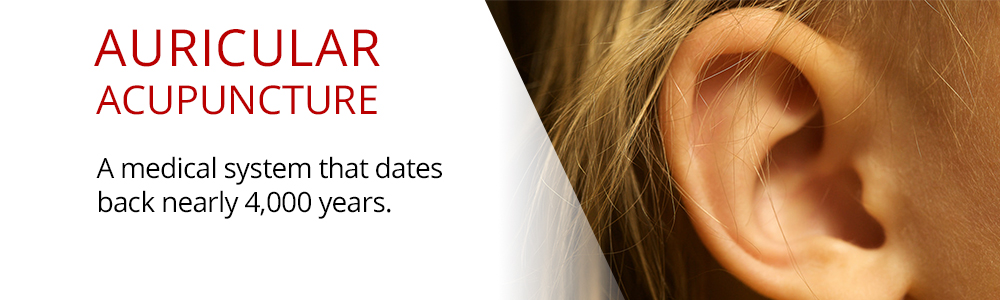
Traditional Chinese Medicine is a medical system that dates back nearly 4,000 years. Auricular acupuncture was first mentioned around 500 B.C. in the Yellow Emperor’s Classic of Internal Medicine, which is the equivalent of the Bible for TCM practitioners. However, the method in which auricular acupuncture is practiced today is actually based upon discoveries that occurred in France in the 1950s. Modern auricular acupuncture is based upon the work done by Dr. Paul Nogier of France.

Auricular acupuncture is the stimulation of the external ear for the diagnosis and treatment of health conditions. These health conditions may be taking place anywhere throughout the body. The stimulation of these acupuncture points can be done manually, with an acupuncture needle, a laser, magnets or ear seeds. Regardless of the means of stimulation, auricular acupuncture can be a very powerful addition to regular acupuncture treatments.

The current form of auricular acupuncture came about after Dr. Nogier noticed a scar on the upper ear of some of his patients. When he inquired about the scar, he found out a local practitioner had been treating his patients for sciatica pain and she was cauterizing this specific area on the external ear to relieve their low back pain. Dr. Nogier conducted similar tests on his own patients and found their low back pain was also relieved. He tried using other means of stimulation as well, such as acupuncture needles and found it to be just as effective as cauterizing the area. So Dr. Nogier theorized if an area of the upper external ear is effective on treating low back pain, then perhaps other areas of the ear could treat other parts of the body. This led to the model now used when teaching auricular acupuncture. The ear is thought to represent the whole anatomical body. However, it is upside down in orientation, so the head is represented by the lower ear lobe, the feet are at the top of the ear and the rest of the body is in between. According to history, the Chinese actually adopted this model of auricular acupuncture in 1958.

Auricular acupuncture is considered a microsystem, in that the ear is like a microcosm of the whole body, meaning one part of the body, the ear in this instance, represents the whole body. Microsystems also appear on foot and hand reflexology, facial acupuncture and scalp acupuncture.

This system has been practiced in Asia, albeit in a different form, for over 2,000 years. Auricular acupuncture has been used in Europe for the past 40 to 50 years. And it is finally starting to take root in the United States. The U.S. military, over the past 5 to 10 years, has started utilizing auricular acupuncture for its battlefield personnel. This form of battlefield acupuncture is used to help soldiers deal with PTSD (post-traumatic stress disorder) brought on by being in combat.

Since auricular acupuncture allows for every part of the external ear to connect through the microsystem to every part of the body, many conditions can be treated using only a few very tiny needles. Not only can PTSD be treated using auricular acupuncture, but also things like chronic pain, drug addiction, high blood pressure and nausea. And for those who are a little needle-shy, auricular acupuncture is a great way to treat them because they will never see the needles and they will still get the help they need to achieving health and wellness.

Photo credit: Ear – Travis Isaacs | CC 2.0

Your Initial Consultation Is FREE.  Come meet us in person and learn more.

Or, just call 201-338-0552 and we will be happy to answer your questions!

Posted in Acupuncture | Tagged , | Comments Off on Auricular Acupuncture

January AcuNews Vol2

EATING HEALTHY FOR THE WINTER!


Winter, in most places, is a time of colder, shorter days. So naturally, when there is less reason to be outdoors, the body tends to want to stay inside where it is warmer. The body’s metabolic rate will be slower, which means eating foods full of sugars can become detrimental over time. When the metabolic rate slows, the body naturally holds onto fat and we gain weight. Just as most animals hibernate throughout the colder winter months, so too should human beings take the information being given and use it accordingly.

According to Traditional Chinese Medicine, winter is a time of preservation and building up strength for the spring. Winter is a time when the kidneys are highly active. They have functions that help the body preserve energy. Foods loaded with salt can actually burden the kidneys and cause them to work overtime. This can lead to kidney disease or kidney failure when done for many years.

Tonics are what should be primarily eaten during the winter months according to TCM. Most tonics include warming herbs, fatty foods and meats. The human body is designed to absorb these rich foods especially well at this time of year. By tuning into nature, humans can be guided toward the proper nutrients. Since fruits are not usually abundant during the winter months, it makes sense we should not be eating large quantities of them. Foods such as fruits, salads and raw foods can deplete the immune system because it will have to work overtime to warm the body. If a person has a dislike of cold weather, joint aches and pains, sore low back or catches cold frequently, then there is too much of an imbalance and that person may be consuming too many cold foods.

It is recommended to eat warming foods during the winter months. Foods that will strengthen the kidneys, blood and Qi (pronounced “chee”), which is sometimes considered our inner form of energy.  Foods that would be best include beef, lamb, root vegetables, dark leafy greens, black beans, oats, quinoa, pumpkin, kidney beans and walnuts. Fruits can be warmed by adding spices like cinnamon, so they don’t tax the system too much. Herbs such as ginseng, garlic, onion, ginger, parsley and basil all have warming properties too that can be used when cooking.

Soups and stews are particularly good to eat at this time of year. Those that utilize bone broth as a base can be very tonifying. These types of foods help warm the body’s core and keep us fully nourished. Cooking should be for longer periods over low heat using less water. This will infuse the food with heat and lasting nourishment.

TCM nutritional therapy is a very important component of the medical system. The food consumed can have profound effects on the body that affect our health and well-being. Along with paying close attention to the foods that are abundant during the seasons, it is also recommended that locally grown foods be utilized. This may help decrease the possibility of allergic reactions.

To find out more about how Traditional Chinese Medicine can help you, contact your local acupuncturist or TCM practitioner. They should be able to guide you along your wellness journey.

Posted in AcuDownloads, Acupuncture, Blog | Tagged , , , | Comments Off on January AcuNews Vol2

January AcuNews Vol1

Starting the New Year Off Right: Get Acupuncture!

It’s almost that time of year again. The time of year when everybody makes promises to themselves known as New Year’s resolutions. But how many actually keep and achieve those resolutions after January? The statistics aren’t very promising. According to Forbes.com, only about eight percent of the people who actually make New Year’s resolutions, carry them to fruition. Not too good. But there is a way to help stay on track with the resolutions. Yes, acupuncture can help with achieving the new goals we set for ourselves. 

For many people, losing weight is the top New Year’s resolution. So we join a gym, start dieting, exercising and by the end of January, most have given up. Why? It’s too hard. Or is it? Acupuncture has been shown to help in many areas when it comes to losing weight. First off, it helps curb cravings. For many, this is huge. Acupuncture can also help balance hormones, which can lead people to eating more than they should and a lot of the things they shouldn’t, like sugary treats. Adding regular acupuncture treatments to proper diet and exercise can greatly increase the likelihood the weight will slowly come off, which is exactly how it should be approached.

Something else that occurs at the beginning of every year, after people join the gym, is they overdo it and then their muscles become overworked and sore. This is another area where acupuncture can help.  Relieving pain and muscle spasms is the most common reason people go to see an acupuncturist.  Unfortunately, it is usually after they have tried everything else without success. Why not avoid the middleman and just go straight to the source? Acupuncture is great for helping relieve pain and spasms, which will allow you to return to the gym more often, thus helping with resolution number one…losing weight.

Finally, regular acupuncture treatments can help relieve stress. After all the holiday get-togethers, the family outings, shopping, decorating and cleaning up all the mess, who isn’t stressed out? Acupuncture is a wonderful way to relax and unwind. And stress reduction is in the top five for those who actually do make resolutions. Stress is the cause of so many illnesses. And numerous studies have shown acupuncture can not only decrease stress and anxiety, but it can also lower blood pressure. For those who are on blood pressure regulating medications, this can be a great adjunctive therapy that can ultimately lead to taking less medications or even being able to stop them altogether. There are also other facets of Traditional Chinese Medicine that can help with stress relief, like tai chi or qi gong. These are both in the martial arts family but they are much more fluid and create less impact on the joints. So not only will you be able to decrease stress, but you may also notice you’re losing weight and gaining health and stamina. It’s a win-win!

So when you start gearing up for those resolutions, don’t forget to include regular acupuncture treatments. You might just be surprised how much easier it is to actually keep the resolutions and achieve your goals.

Sidebar – Three Acupuncture Points for the New Year

The following three acupuncture points are perfect for starting the New Year off on the right foot. These acupuncture points are great for the cold winter months and will help you reach your resolutions by providing that extra boost of Qi you need.

1.   Urinary Bladder 23

This point is located bilaterally, on either side of the spine, it can be found one and a half thumb-breadths from the lower border of the second lumbar vertebra. This point is frequently used in the winter to help with deafness, dizziness, knee pain, low back pain and urinary issues.

2. Governing Vessel 14

GV 14 is a very important point for the winter months. GV 14 is located below the seventh cervical vertebra.

The defense layers of our skin are strengthened when you utilize the point GV 14. This is due to the fact this point activates a significant amount of blood and Qi circulation, which provides the increase in strength.

This point is used during the winter months to prevent and cure colds, flu and seasonal-related sickness.

3.   Stomach 36

Located bilaterally on the outer lower leg, this point can be found one finger-breadth from the border of the upper tibia and about three thumb-breadths below the lower border of the knee cap.

St 36 is known as the longevity point in TCM. Some issues this point can help solve are fatigue, dizziness and knee pain.

Posted in Blog | Tagged , , | Comments Off on January AcuNews Vol1

Why am I so cold?

Everyone feels cold sometimes, but some people are perpetually chilled to a point where it interferes with their lives.

From a Traditional Chinese Medicine perspective, there are two different kinds of cold in the body: full cold and empty cold. Full cold refers to a condition where there is an excess of cold-type energy in the body leading to a feeling of cold, and most likely other health problems, as well. The other kind of cold is empty cold. This means there is not an abundance of cold energy but rather a weakness of the warm fiery energy. When there isn’t enough warmth in the body, you will feel cold – not because the cold is so strong, but because you don’t have enough fire to balance it out.

Full cold

As mentioned, a full cold condition refers to an over-abundance of cold type energy in the body. This is often an acute case and may relate to being outside on cold weather, or exposing a certain area of your body to cold water, cold wind or cold weather. Symptoms really depend on the location of the cold in the body.

For instance, you might feel really cold when you are coming down with a cold virus. From a TCM perspective, this is cold being trapped under the skin or in certain channels on the back of the neck. Other associated symptoms may be a stiff neck, a runny nose or an occipital headache.

Full cold can also lodge itself in the digestive system – this may happen following a meal of cold food, drinking cold beverages in a cold environment or following exposure to very cold temperatures. Full cold in the digestive system can lead to a feeling of cold, as well as painful cramping, diarrhea or loose stools and pain in the abdomen.

Another common site of a full-cold condition is the uterus. This can be from exposure to cold temperatures such as swimming in cold water or sitting on a cold surface. Certain gynecological procedures can also introduce cold into the uterus. This type of cold manifests as a feeling of cold, particularly with the period and very painful cramping before and during the period. There will likely also be clots and possible problems with fertility.

All of these full-cold conditions can be avoided by limiting exposure to cold environments and cold foods. Also introducing heat internally through teas, soups and warming herbs can help.

Empty cold

In TCM, health is a state of balance between yin and yang. Yin refers to the cool, watery, passive parts of our physiology, whereas yang refers to the hot, fiery, active parts. When the yang energy is weakened, there isn’t enough fire to balance out the cool and watery yin. This leads to a pervasive feeling of cold that is hard to shake, even with lots of blankets and warm drinks. This is someone who always feels chilled, no matter what. There may be other symptoms, as well, such as loose stools, a lack of energy or motivation, wanting to sleep all the time or fluid accumulation. Yang deficiency cold often requires use of herbal medicine, acupuncture, and moxa to treat appropriately.

While these are the main reasons for feeling cold, there are two other energetic imbalances that can also lead to feeling cold – Qi stagnation and blood deficiency.  When Qi is stuck, circulation is impaired and heat can’t get to our extremities effectively. This kind of cold often manifests as very cold hands and feet. It can be helped by regular exercise, reducing stress and limiting heavy foods. A weakness in the blood energy of the body leads to a low-grade constant feeling of cold less severe than a yang deficiency cold, but still pervasive and consistent. It can be helped with getting enough sleep, reducing stressors and eating a well-balanced diet of blood-nourishing foods.

Your Initial Consultation Is FREE.  Come meet us in person and learn more.

Or, just call 201-338-0552 and we will be happy to answer your questions!

Posted in Traditional Chinese Medicine | Tagged , , , , , | Comments Off on Why am I so cold?

The Bladder in Chinese Medicine

In Traditional Chinese Medicine, the bladder is one of the six yang organs, paired with one of the six yin organs. The yin organs store vital substances (such as Qi, blood, yin, and yang), whereas the yang organs are more active and have a function of constantly filling and emptying. The bladder is a perfect example of a yang organ. Its main physiological function is to remove water from the body in the form of urine. To do this, the bladder uses Qi (energy) and heat from its paired yin organ, the kidneys. continue reading »

Posted in Acupuncture, Traditional Chinese Medicine | Tagged , , | Comments Off on The Bladder in Chinese Medicine
201-338-0552 Directions Contact/Schedule